


One profit architecture.
Each discipline governs a precise dimension of the CLW elimination and profit design process — together forming the only integrated system that embeds profitability prospectively into operations.
Never profitable
by design. Strategy sets direction.
It does not architect the financial rhythm that must govern every operational decision.
Hoshin Kanri deploys the vision. X-matrices cascade objectives. Goals are monitored quarterly. And yet — no strategic framework defines a required profit per unit of time as the governing constraint of the system. The strategy that cannot name its required profit per minute of operation is not a strategy. It is an aspiration with a calendar.
Never financially
synchronised. Operations improve their speed.
None synchronise that speed with the profit it must produce per minute.
TPM strengthens OEE. Lean eliminates waste. WCM integrates disciplines through cost deployment. TOC focuses on the constraint. None asks: what profit rate must this operation achieve per minute of execution? Operational excellence without financial governance is not excellence — it is activity governed by the wrong metric.
Never engineered
into profit. Costs are measured against history.
Profit is never designed into the future.
Traditional budgets reflect last year’s performance. Standard costing measures variance. Activity-based costing allocates more precisely. Kaizen costing targets reduction. Not one of them asks: what must profit be, per minute, for this organisation to govern its own future? Profit remains the residual left after revenues offset expenses — never designed, never governed. And what is not governed is surrendered.
operational speed, profitability,
and continuous improvement into a
single governing architecture.
Strategic Kaizen does not refine what exists — it architects what must exist so that profitability, speed, and improvement operate as one integrated mechanism.
In an environment where financial pressure, demand volatility, and operational complexity rise simultaneously, Strategic Kaizen provides the rhythm, clarity, and instruments organisations need to create value continuously — for customers, employees, shareholders, and society.
It is a managerial architecture. The only one in the world that embeds profit prospectively into operations — before the first resource is allocated.
Most improvement disciplines ask: how do we reduce losses and waste? Strategic Kaizen asks a different question entirely: what profit rate must this organisation achieve per minute of operation — and how do we build the system that delivers it?
Profitability through the elimination of losses and waste across all 23 loss and 16 waste categories — not through capital expenditure. The CLW is always there. The decision to govern it is not.
Every operation, every minute, every decision aligned to a single financial rhythm: the Takt Profit rate. When excellence is governed, it is not aspirational — it is structural.
Profit targeted, architected, and built into the operational system before the fiscal year begins. What is not designed is not governed. And what is not governed is surrendered.
to the cleanrooms of Pharma — one governing architecture.
Intelligence briefings that keep the governing executive ahead of CLW erosion — structured for those who have decided to govern.
Enter → DeploymentThe ArsenalTakt Profit Calculator, CLW Quantification, KAIZENshiro Stratification, six deployment playbooks.
Enter → Precision InstrumentsStrategic ToolsThree interactive calculators: Takt Profit Rate, CLW Quantification, KAIZENshiro Stratification.
Access →KAIZENshiro
Budget Potential
Enter your annual manufacturing cost and select your industry to receive an instant estimate of your CLW opportunity and potential profit architecture gains — the first calculation on the path to designed profitability.
Cost of Losses and Waste (CLW) represents 30–38% of total manufacturing cost. The KAIZENshiro Budget identifies the precise portion of this CLW that can be systematically eliminated through Strategic Kaizen deployment — generating profit by design, not by chance.
The full suite at Exegens Tools—Takt Profit Rate Calculator, CLW Quantification Engine, and KAIZENshiro Stratification—is the precision instrument that transforms this estimate into a governance-ready profit architecture. The calculations that distinguish designed profitability from aspiration.
Enter the Strategic Calculations Suite →Indicative calculation based on Strategic Kaizen research across 100+ organisations.

POSTEUCĂ
Romanian Academy Laureate
no answer.
A decade to build one.
before I allocate resources.”
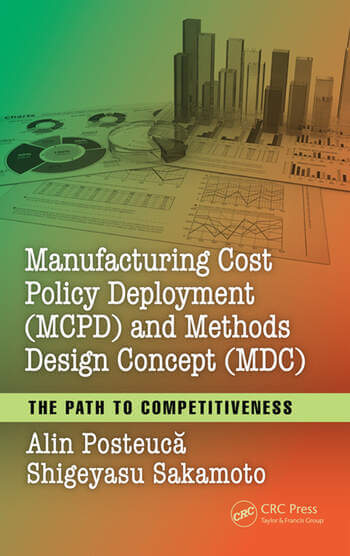
about Strategic Kaizen.
door.
If your organisation is exploring a transformation synchronised with both customer demand and profit requirements — you are invited to initiate a dialogue with Dr. Alin Posteucă, oriented toward structural results.
everything begins
with one message.”
It is built — or surrendered —
takt minute by takt minute. What is not designed is not governed.
And what is not governed is surrendered.
Twenty years. One hundred and fifty projects. Twelve industries.
One confirmed truth: the only thing standing between
your organisation and designed profitability
is the decision to architect it.