


Tangible Impact
and Intangible
Gains.
and Ensures 100% Improvement Traceability — Without Capital Investment
When flow is designed for profit and behaviour is synchronised with takt, the result is not merely performance — it is enterprise value, takt minute by takt minute. This is Strategic KAIZEN.
The bifocal architecture of transformation Tangible Impact 8 Measurable Results
Profit · Cost · Traceability · Cadence Intangible Gains 8 Cultural Dimensions
Mindset · Leadership · Resilience Transformation Imperatives Three Phases · Three Architectures
Capability · Competitiveness · Excellence Governance Confirmations What Leaders Verify at Each Phase
Confirmed · Traceable · Irreversible Management Indicators Results from Exegens® Consulting
Profit · Cost · Capacity · Safety Academic Foundation Five Works · 30+ Applications
Routledge · CRC Press · Taylor & Francis
A Bifocal Architecture of Enterprise Transformation.
In today’s fragmented execution landscape, Strategic KAIZEN provides a bifocal framework for enterprise transformation — one that aligns short-term resilience with long-term competitiveness. At its core lies Strategic Objective Setting: a dual-focus approach, pursued in parallel, embedded within a coherent architecture of governed planning, structuring and execution. Strategy without a profit cadence is aspiration. Execution without a takt cadence is noise. Together, they represent the architecture of enterprise value — governed takt minute by takt minute.
Tangible results, aligned with Takt Profit, that alter the financial structure of the enterprise. Each objective is governed by the Annual Takt Profit Target, reflected in the Master Budget and confirmed in the Cash Flow and Balance Sheet. Profitability is not improved — it is governed. Every takt minute is accountable. Every initiative is traceable. What cannot be traced to the Annual Takt Profit Target is not an objective — it is a wish dressed as a commitment.
Forward-facing intangible capabilities that make tangible results permanent. KAIZENshiro Culture is not a training programme — it is the infrastructure through which improvement becomes a self-sustaining cadence. Behaviour synchronised with takt is not a subtle outcome — it is the governing logic of enterprise resilience. Culture is not declared. It is the residue of architectural discipline applied consistently — confirmed in every takt minute governed without external dependency.
Strategic KAIZEN does not merely optimise processes — it reconfigures execution as a strategic system. Fragmented initiatives are replaced by a unified architecture in which every structural element, behavioural cadence and financial decision is orchestrated to deliver enterprise value. By embedding Ideal Takt Profit into the cadence of operations, organisations move beyond synchronisation and reach financially governed coherence. This is not about efficiency. It is about designing execution as a rhythm of value creation — where every takt minute is intentional, every improvement is traceable, and every strategic decision confirms that profit was designed, not hoped for.
Governed by Takt Profit, Confirmed in Financial Statements.
Strategic KAIZEN delivers measurable impact across the entire execution architecture — without capital investment, sustained through disciplined cadence and financial governance. These results are not promises. They are the structural consequence of governing operations through Takt Profit. What is designed endures. What is architecturally governed compounds — takt minute by takt minute, inevitably.
Growth achieved at strategic bottlenecks, aligned with KAIZENshiro Budgeting and SBTP targets. Profitability is not improved — it is governed. The architecture delivers what the initiative merely promised.
Elimination of chronic and hidden CLW/CCLW losses across all execution layers. Cost is not cut — it is architecturally governed to disappearance through disciplined identification and structural elimination.
Stabilised cadence across planning and decision cycles, enabling predictable delivery and margin resilience. Cadence is the proof that strategy was real. Stability is the proof that the architecture was precise.
Every initiative mapped to the Annual Takt Profit Target and reflected in principal financial statements. Strategy is no longer declared — it is confirmed in every audit, every quarter, every takt minute.
Corrective actions accelerated through the Strategic KAIZEN Monitoring System. Real-time visibility, structured deviation management and escalation protocols that preserve strategic coherence before deviation becomes structural.
The Strategic KAIZEN KPI Tree aligns strategic, operational and financial domains within a single governing architecture. The organisation ceases to manage silos — it governs a unified system of profitable execution.
Increased completion rate of Must-Win KAIZEN Projects, each delivering measurable improvements in flow, cost and profitability. Projects are not launched — they govern. Completion is confirmation that the architecture endured.
Daily operations rhythmically aligned with strategic financial expectations and shareholder reporting. When strategy and execution are the same architecture, performance is no longer episodic — it is inevitable, structural and self-sustaining.
These results are not the consequence of working harder. They are the consequence of working within a designed architecture. Strategic KAIZEN ensures that improvement is not a cost — it is a cadence of value creation. Not a reaction — but a system of profitable execution, by design. What is architecturally governed does not regress — it compounds. Takt minute by takt minute, inevitably.
tangible results become permanent.
Beyond indicators, Strategic KAIZEN cultivates behavioural and cultural shifts that sustain profitable execution and long-term organisational resilience. These outcomes are not subtle. They represent the capacity to govern operations without external dependency — takt minute by takt minute, permanently. When culture becomes capability and capability becomes synchronised with Takt Profit, Dual Profit Growth is no longer an objective — it is the structural consequence of deliberate design.
to architecturally sustained enterprise resilience.
These intangible gains are not aspirations — they are the structural residue of governance applied consistently. Culture is not declared in a vision statement. It is confirmed in every takt minute governed, every deviation resolved, and every improvement traced to its financial consequence. What is embedded does not require enforcement — it is the way decisions are made.
A shift from reactive problem-solving to proactive, takt-aligned value creation. The organisation no longer responds to costs — it governs profit by design. What is embedded does not regress — it compounds.
Managers evolve into architects of cadence, guiding teams with structural clarity and financial intention. Leadership means designing the conditions in which profitable execution becomes inevitable — not directing what is already possible.
Teams interpret variation, prioritise root causes, and act with financial intention at every decision point. Judgement is not trained — it is architecturally cultivated through the Learning Loop and consistent financial exposure.
Communication becomes structured, transparent, and rhythmically aligned with KAIZENshiro Culture. Trust is not a declared value — it is the evidence of consistent architectural discipline, confirmed in every governed cycle.
Leadership behaviours become visible, consistent and congruent with the enterprise profit architecture. Credibility is not claimed — it is the residue of behaviours aligned with Takt Profit cadence, every day, without exception.
Resistance to change is replaced by cadence and accountability — anchored in KAIZENshiro Culture. Resilience is not a personality trait — it is an architectural outcome. The enterprise absorbs disruption without losing its profit cadence.
Continuous capability development, embedded in daily execution through the Learning Loop. Learning is not a programme — it is a cadence of deliberate improvement, confirmed in every KPI deviation resolved and every audit cycle completed.
KAIZENshiro Culture adapts across geographies, business units and market conditions without losing coherence or Takt Profit intention. Scale does not dilute the architecture — it confirms it. What is structurally embedded scales without dependency.
Strategic KAIZEN ensures that improvement is not a tactical correction — it is a strategic capability. Not a cost — but a cadence of value creation. Not a reaction — but a system of profitable execution by design. When culture and architecture are the same discipline, the enterprise does not improve. It becomes a different way of governing value — permanently, structurally, takt minute by takt minute.
From Capability Building to World-Class Leadership.
Strategic KAIZEN does not produce results through a single intervention — it builds them through a disciplined, phased transformation architecture. Each phase unlocks the next. Every result gained becomes the foundation for what follows. Transformation is not a project. It is a permanent architectural shift in the way the enterprise creates and governs value — and it is confirmed not in presentations, but in the financial statements of every subsequent quarter.
- Reducing production costs through structured architectural identification and elimination of CLW/CCLW — cost is not cut, it is governed to disappearance
- Strengthening the internal factory environment through rhythmic governed routines aligned with Ideal Takt Profit
- Developing foundational shop-floor capabilities — the architecture of competence through design, not chance
- Consolidating QCD performance through takt-aligned execution discipline — quality, cost and delivery as a single governed system
- Improving new product and equipment launch capability through structured readiness protocols governed by Takt Profit
- Creating safe and purposeful working environments — safety is not a compliance requirement, but a prerequisite of sustainable profit governance
- Using Strategic KAIZEN indicators to assess business performance — every KPI traced directly and irreversibly to Dual Profit Growth
- Increasing employees’ desire to improve — engagement is the cultural residue of architectural clarity delivered consistently
- Beginning development of a new organisational culture — KAIZENshiro Culture as the governing infrastructure of profitable behaviour, owned at every level without external dependency
- Reducing total product cost through KAIZENshiro Budgeting aligned with the Annual Takt Profit Target — every euro saved is architecturally justified
- Developing programmes to increase added value — profitability is not cut into existence, it is designed through structural value creation
- Establishing effective responsiveness in competitive environments through the SPO architecture — responsiveness as a governed capability
- Continuing consolidation of foundational capabilities — what is architecturally embedded scales without dependency and compounds without diminishing returns
- Establishing QCD across products, production and marketing — quality, cost and delivery as a unified profit system, governed across every operational dimension
- Developing improved products and production systems through financially governed innovation cycles — every development decision justified by Takt Profit
- Consolidating environmental protection programmes — sustainability is a dimension of structural governance, not a separate agenda
- Increasing competitiveness through innovative Strategic KAIZEN programmes governed by Ideal Takt Profit — not by market circumstances
- Maximising resource utilisation efficiency — every asset and every minute governed by the profit architecture, not by habit or tradition
- Achieving world-class levels in performance indicators across all Strategic KAIZEN dimensions — confirmed, not declared
- Developing the capacity to meet the requirements of perpetual corporate prosperity — governance without external dependency, compounding without ceiling
- Transforming foundational capability consolidation into a way of life — embedded, owned, self-sustaining, confirmed in every quarterly result
- Establishing QCD in R&D and in prototyping and pre-production — financial governance from concept to delivery, from idea to takt
- Consolidating activities that create added value for the company as a whole — every function governed as a contributor to Dual Profit Growth
- Consolidating resource conservation programmes — efficiency as a structural outcome, not a seasonal initiative or reactive response
- Developing the conditions for perpetual prosperity through creative Strategic KAIZEN programmes governed by Ideal Takt Profit and Dual Profit Growth
at Each Phase of Governed Transformation.
Governance Confirmations are not aspirations — they are structured milestones confirmed through the Strategic KAIZEN Monitoring System, Control Plan and Audit Cycle. What is expected is designed. What is designed is governed. What is governed is confirmed — in every audit, every quarter, every takt minute. These are the verifiable signatures of an architecture that has endured.
- 01OEEs on target and productivity demonstrably increasing — cadence governs results
- 02Significant results in reducing equipment breakdowns, in-process quality defects and customer complaints
- 03Delivery times reduced; finished goods and WIP inventories substantially lower than before Strategic KAIZEN
- 04Systems for zero lost-time accidents and zero environmental complaints operational and producing results
- 05Production costs in demonstrable decline through governed elimination of CLW/CCLW — not estimated, confirmed
- 06Vertical start-up of new products and equipment achieved through structured readiness protocols
- 07Strategic KAIZEN cost benefits confirmed and traceable to the Annual Takt Profit Target
- 08Employee attitudes shifting; working environments becoming ownership-oriented without external mandate
- 09Results contributing to company net profit, realised and confirmed in financial statements
- 10Outstanding issues clearly identified; concrete action plans formulated, governed and executed
- 01Phase Two-specific indicators established; results achieved with full financial traceability and confirmed in Master Budget
- 02Phase One results continue to compound through structural governance — not maintained, accelerated
- 03KAIZEN initiatives delivering lower product costs and higher profits — confirmed in Master Budget and Cash Flow
- 04Confirmed progress in reducing break-even points through KAIZENshiro Budgeting — measurable, structural
- 05Management ratios such as profitability and capital turnover rate in consistent improvement
- 06Wasteful investments avoided through risk assessment based on well-designed market research
- 07Products highly valued by customers; market share growing through delivery as a profit lever
- 08Loss-reduction targets in sales operations met; revenue and profit targets realised
- 09Environmental protection programmes actively tracked; waste elimination and energy conservation targets met
- 10Development times reduced; share of new products in revenue reaching targets — innovation governed, not speculated
- 01Phase Three indicators reaching results; some among the best in the world in their industry — not benchmarked, surpassed
- 02Strategic KAIZEN indicators from Phases One and Two continue to deliver — compounding, not regressing, confirmed structurally
- 03In a global industry context, some practices recognised as potential world-class benchmarks
- 04New markets and customers actively developed through profit-governed innovation — not reactively, architecturally
- 05Efficiency of invested resources maximised through improvements targeting all management resources
- 06Solid results for QCD indicators in administrative and support departments — governance beyond the shop floor
- 07Remarkable results in new technology development, with reputation confirmed as exceptional in the industry
- 08New products that have created new markets and delivered remarkable profit contributions — profit by design
- 09Company accepted by the public as a model of good environmental practice — governance visible beyond the enterprise
- 10Successful new business initiatives grounded in forecasting and analysis of products and markets — the future governed, not awaited
Confirmed Across Decades of Strategic KAIZEN Governance.
These are not benchmarks or aspirational targets. They are the structural results of Strategic KAIZEN governance applied consistently across diverse industries and geographies. Profitability is not a consequence of effort — it is a consequence of architecture. Every indicator below is governed by Takt Profit, traced through the KPI Tree and confirmed in the financial statements of organisations that chose to design enterprise value, not hope for it. Note: These General Management Indicators are detailed into specific KPIs according to the strategic profile of each company, across six directions: productivity, quality, cost, delivery, safety and personnel morale.
Achieved through KAIZENshiro Budgeting, SBTP target governance and the Dual Profit Growth architecture — Internal Profit grown through CLW elimination, External Profit activated through throughput and responsiveness. Profit is not improved. It is governed.
Structural Cost ReductionSystematic elimination of chronic and hidden losses across 23 loss categories and 16 waste categories — quantified, stratified and architecturally governed. Cost is not cut. It is governed to disappearance through architectural precision.
Total Delivery TimeThe takt-governed flow architecture compresses delivery times across procurement, production and distribution — reducing inventories, improving responsiveness and transforming delivery from a logistical endpoint into a governed profit lever. Flow is not accelerated. It is architected.
Company CapacitySynchronous Profitable Operations (SPO) unlocks productive capacity through bottleneck redesign, OEE improvement and takt time alignment — releasing hidden production reserves without capital investment. Capacity is not purchased. It is architecturally released.
Major AccidentsSafety is not a regulatory condition — it is a prerequisite of sustainable Takt Profit governance. Systems for zero lost-time accidents are embedded in the Strategic KAIZEN Control Plan from Phase One, confirmed in every audit cycle. What is governed does not happen by accident.
Quality ComplaintsQuality is not inspected into products — it is governed into the execution architecture. Through the Strategic KAIZEN Monitoring System and Learning Loop, every source of defect is identified, eliminated and architecturally prevented. Zero is not a target. It is confirmation that governance was real.
These indicators are not promised in a proposal. They are confirmed in organisations that chose to govern execution through Takt Profit — consistently, architecturally and without capital investment. Profit is not a consequence of effort. It is confirmation that the architecture was real — and that governance never stopped.
Over 30 Applications Across Diverse Industries.
The Strategic KAIZEN architecture is documented in five works published by Taylor & Francis, Routledge, CRC Press and Productivity Press — covering high-volume production, synchronous profitable operations, speed-based investment governance, cost policy deployment in manufacturing and the complete Dual Profit Growth architecture. Theory confirmed in practice across more than 30 real industrial applications is no longer theory. It is a governing discipline — published, peer-reviewed and applied in 12 industries, in organisations across four continents.
Five Works · Taylor & Francis · Routledge · CRC Press & Productivity Press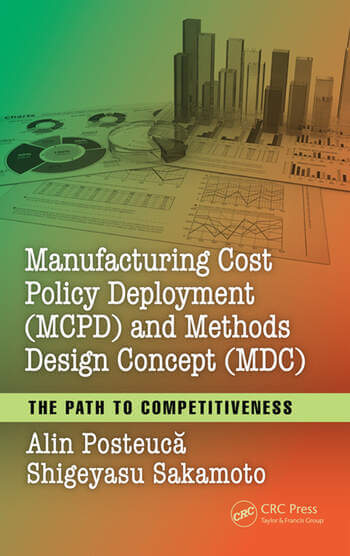
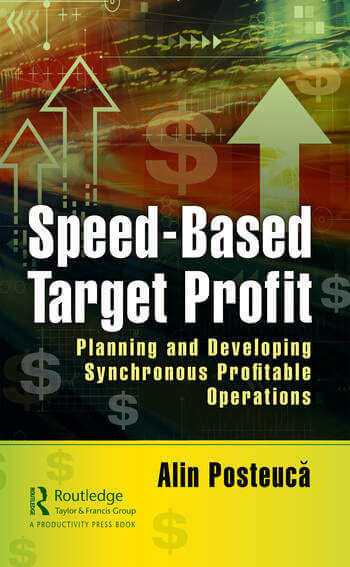
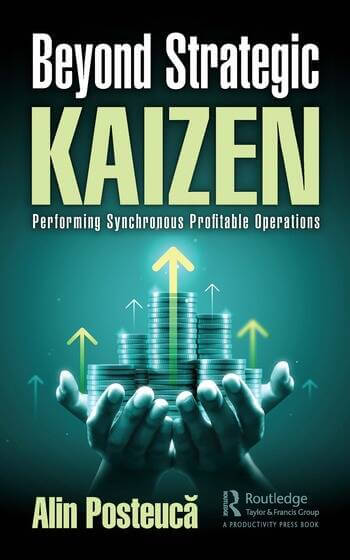
The Strategic KAIZEN architecture documented in these five works is not academic theory awaiting confirmation. It is intellectual infrastructure already confirmed — in more than 30 industrial applications, in 12 industries, in organisations that chose to govern enterprise value rather than hope for it. Theory confirmed in practice is not knowledge. It is a governing discipline. What is published is documented. What is applied is confirmed.
Confirmed in Financial Statements, Not in Presentations.
The application below demonstrates how Tangible Impact and Intangible Gains converge in practice — where measurable financial results and cultural transformation are not separate dimensions, but the simultaneous outcome of a single governed architecture. What Strategic KAIZEN delivers cannot be separated into financial and cultural components — they are the same discipline, confirmed in the same takt minute. The intangible gains were not separate deliverables. They were the proof that the architecture had endured — and that it would continue to endure without external dependency.
Three Strategic KAIZEN projects. One governed architecture. Must-Win Strategic KAIZEN Projects selected through Financial Catchball and Operational Catchball — each traced to the Annual Takt Profit Target, governed through the Strategic KAIZEN Monitoring System and confirmed in the Master Budget. Internal Profit governed through structural elimination of CLW/CCLW. External Profit activated through bottleneck throughput redesign. The intangible results — embedded mindset, leadership as architectural designers, trust-based execution culture — were not separate deliverables. They were confirmation that the architecture was real, that it endured, and that it will continue to govern without external dependency.
When flow is designed for profit and behaviour is synchronised with takt, the result is not merely performance — it is enterprise value, takt minute by takt minute. This is Strategic KAIZEN. Not a methodology applied to an organisation. An architecture that the organisation becomes — permanently, structurally and without capital investment. What is governed endures. What is architecturally designed compounds. What is confirmed in financial statements is the only evidence that matters.
execution as a cadence
of enterprise
value creation —
This is not about incremental performance improvement. It is about redesigning the enterprise’s relationship with profitability — where every takt minute is intentional, every improvement is traceable, and every leadership decision confirms that Takt Profit was designed before it was achieved. Improvement that cannot be designed cannot be governed. Governance that cannot be confirmed in financial statements is not governance — it is performance.
Strategic KAIZEN is not a methodology you apply to an organisation. It is a discipline the organisation becomes. Tangible results alter the financial structure. Intangible gains ensure that they endure. Together, they confirm that transformation is not an event — it is a permanent architectural shift in the way enterprise value is governed. Takt minute by takt minute. Quarter by quarter. Inevitably.
Improvement that cannot be traced to the Annual Takt Profit Target is not improvement — it is activity. Strategic KAIZEN governs the difference — architecturally, permanently and without capital investment.
Intangible gains are not cultural additions to financial results. They are the infrastructure through which financial results become self-sustaining. Culture is the proof that the architecture endured — and that it will continue to endure without external dependency.
Strategic Objective Setting is not a planning exercise. It is the governing logic through which every decision — financial, operational, behavioural — is made in alignment with Takt Profit. What is aligned governs. What governs endures. What endures compounds.
When flow is designed for profit and behaviour is synchronised with takt, the result is not merely performance. It is enterprise value, takt minute by takt minute. This is Strategic KAIZEN. Not a methodology — a discipline of architectural thinking that aligns vision with structure, cadence with accountability, and every takt minute with confirmed enterprise value.
and behaviour is synchronised with takt,
the result is not merely performance.