


for Logistics
& Supply Chain.
Flow Profit is not a logistics metric. It is the financial limit of the entire network — governed, not hoped for.
Volatility must be architected.
Automotive has takt. Fabrication & Assembly has cycle time. Process Industries have continuity. Logistics has volatility. It is not a flaw to be corrected. It is the structural ”raw material” of the industry — and the only organisations that sustain profitability are those that have learned to govern it.
Every procedure written to prevent disruption has already decided to react to the next one. Volatility is not a logistics problem with a technology solution. It is a governing challenge with an architectural answer.
Strategic KAIZEN transforms volatility from threat into governed competitive advantage — through KAIZENshiro budgeting that makes invisible losses visible, SBTP that governs every speed investment, and SPO routines that synchronise interdependent nodes without amplifying disruption.
The organisations that sustain competitive advantage in logistics are not those with the most sophisticated technology. They are those that built the architecture through which every flow minute became intentional, every loss visible, and every financial consequence governed — before it compounded.
The logistics organisation that cannot govern its flow time cannot govern its costs. The organisation that cannot govern its costs has already decided how its quarter will end. Strategic KAIZEN does not optimise networks. It governs the conditions under which Flow Profit cannot be eroded.
It Was Never Architected to Govern Flow Profit.
Logistics & Supply Chain operates at the most unforgiving intersection in modern commerce: volume complexity, last-mile volatility, cross-functional interdependence, and permanent margin compression — converging in real time, at every node, in every delivery cycle. Most organisations measure what they deliver. The organisations that govern their future measure what every flow minute costs them.
Every node in the network is simultaneously a cost centre, a performance constraint, and a potential source of invisible CCLW — Critical Cost of Losses and Waste: the financial consequence of every truck delay, every packaging deviation, every informational flow failure, every desynchronised handoff. These losses are real. They compound across shifts, nodes, and quarters. And they do not appear in standard logistics accounting — until they appear in the P&L.
Flow time is not a logistics metric. It is the financial limit of the entire network — governed or not. Every minute of unintentional flow is CCLW. Every CCLW that is not governed by KAIZENshiro is a cost that compounds in silence. The organisation that has not yet made its CCLW visible has not yet begun to govern its Flow Profit.
- Demand volatility amplified by global supply chain fragility and last-mile unpredictability
- Fragmentation between warehousing, transport, and fulfilment — each optimised in isolation
- Unstable lead times that rupture customer commitments without warning
- Cross-functional decisions made too slowly, at the wrong organisational altitude
- Digital initiatives deployed without KAIZENshiro governance or Flow Profit accountability
- Firefighting as an operating model — consuming the bandwidth required for rhythm
- Packaging and material losses invisible to standard cost accounting
- Informational flows that amplify delays instead of absorbing them
They are executing without a governing architecture. The difference is not operational. It is existential.
Every demand disruption propagates instability through nodes never designed to absorb it. Flow Profit fluctuates. KAIZENshiro targets dissolve. The organisation firefights instead of governing — each response confirming that the architecture of absorption does not exist.
Unplanned packaging consumption, informational flow failures, and stock misalignment compound into structural Critical Cost of Losses and Waste — never quantified, never governed. The CCLW grows in the P&L quarters before it becomes visible as a strategic problem.
When a truck spends 19 minutes travelling from gate to warehouse, it is not a logistics inefficiency. It is a governance failure — chosen to manifest as a delay. The informational flow was never designed. The SPO routines were never built. The CCLW was never measured.
WMS systems are upgraded. BI dashboards proliferate. Digitalisation initiatives launch. Yet the CCLW compounds — because technology amplifies the architecture that exists, not the one that was intended. Flow Profit cannot be governed by dashboards that do not measure it.
Supply chain, warehousing, transport, and fulfilment operate as adjacent systems, not as one financially governed network. The decision that should take three minutes takes three days. The delay that should be absorbed compounds — because the SPO architecture that synchronises them was never built.
The gap between what SBTP demands and what the network delivers is an architectural failure — not an execution failure. The connective tissue between strategic intent and financially governed flow-minute execution does not exist. The result is a network that performs and a strategy that waits.
The result is a network that delivers — but does not govern its Flow Profit. That functions — but does not create lasting competitive advantage. That reacts — but does not architect its next quarter. The organisation that cannot see its CCLW has already decided to fund it.

The First Financially Governed
Flow Execution Architecture.
Strategic KAIZEN is the first framework engineered to transform flow time from an operational constraint into a Flow Profit mechanism. Developed through decades of deep intervention in the world's most demanding logistics and supply chain systems, it redefines the fundamental unit of organisational performance — from the initiative to the flow minute.
Every loss quantified through KAIZENshiro budgeting. Every investment governed by Speed-Based Target Profit. Every operational decision synchronised through SPO. This is not optimisation — not another WMS, dashboard, or digital programme. This is the architecture of Synchronous Profitable Operations in high-volatility, high-interdependence networks.
of the Architecture
Simultaneously governs near-term Flow Profit — through Ideal Flow Time synchronisation and node stability — and long-horizon capability: autonomous networks, digital twins, AI-driven routing, elastic capacity, and last-mile volatility absorption. Today's KAIZENshiro and tomorrow's network architecture, governed by the same financial logic.
A financial governance mechanism designed to surface, quantify, and systematically eliminate every Critical Cost of Losses and Waste that standard logistics accounting cannot see — unplanned packaging consumption, informational flow delays, desynchronised truck arrivals, invisible WIP compounding across nodes. Losses governed before they compound into structural disadvantage.
Every investment in speed, technology, and logistics infrastructure governed by a single irreducible criterion: its measurable impact on Flow Profit at the network's profit bottleneck node. SBTP transforms investment governance from financial approximation into architectural precision — every capital commitment an act of SPO intent.
SPO synchronises rhythmic planning routines, cross-functional decision structures, and KAIZENshiro accountability across warehousing, transport, fulfilment, and supply chain — into a single coherent operating framework. The logistics network begins to function as a unified, financially governed value-creation mechanism — flow minute by flow minute, KAIZENshiro by KAIZENshiro.
in the Logistics Organisation
Strategic KAIZEN creates a behavioural and financial infrastructure that sustains Flow Profit long after the initial transformation. These are not soft benefits. They are the durable foundations of competitive advantage in high-volatility, high-consequence networks — permanent capabilities, visible every quarter in the financial statements of the organisation that built them.
The logistics network that governs its CCLW does not need more technology. It needs the architecture that makes every flow decision financially traceable, every node accountable, and every quarter a confirmation that the architecture is real.
Every flow minute measured against its KAIZENshiro consequence — not merely its operational SLA. The OTIF metric is replaced by the Flow Profit metric.
Logistics losses invisible to standard accounting — packaging waste, dock delays, WIP misalignment — surface, are quantified, and are permanently governed by KAIZENshiro budget discipline.
Leaders transition from managers of supply chain disruptions to architects of Flow Profit — at every altitude from warehouse floor to C-suite decision cadence.
Warehousing, inbound transport, last-mile fulfilment, and procurement aligned around one financial logic — KAIZENshiro. Not four separate KPI frameworks. One governing architecture.
Every truck, every dock assignment, every loading sequence redesigned as an intentional, pre-governed act — not a real-time improvisation. The 19-minute gate time becomes 3. By design, not by urgency.
Synchronous Profitable Operations routines replace firefighting — rhythmic planning cadences synchronised across supply chain nodes protect Flow Profit without absorbing disruption through cost.
Every operational logistics decision carries its Speed-Based Target Profit consequence — not just its delivery metric. The network learns to govern speed as a financial instrument, not an operational variable.
Each KAIZENshiro cycle builds on the previous. Competitive advantage accumulates in a way that no technology deployment can replicate — because it is embedded in how the organisation thinks, decides, and governs its flow.
From CCLW Identification to Synchronous Profitable Operations
A high-volume manufacturer with six production modules operating in continuous regime — facing a predictable sales decrease for the next fiscal year. In this scenario, the imperative is unambiguous: target profitability cannot be maintained through volume alone. Internal profit — annual KAIZENshiro — must compensate. CCLW identified: $27,500,000. Annual KAIZENshiro target: $5,150,000 (6.5% manufacturing cost reduction). Takt Profit target: $235 / 47 seconds. OEE target: from 67% to 71%. Speed-Based Target Profit: $300 per minute. Annual production time: 116,000 minutes per shift. Ten Strategic Kaizen projects were selected — including three presented here, two of which are White-Collar Strategic Kaizen projects in the supply chain and logistics domain. This is the architecture in which every minute of flow became intentional, every loss visible, and every decision financially governed.
Both projects targeted logistics CCLW that existed for years before Strategic KAIZEN made it visible. Neither required significant capital investment. Both delivered KAIZENshiro that compounded the organisation's competitive position — permanently, architecturally, and with full financial traceability.
In logistics, the losses that compound most destructively are the ones that were never quantified. KAIZENshiro makes them visible — at the node level, the shift level, and the financial statement level.
The unfavourable variance between planned and actual packaging material consumption had accumulated to $310,000 over the previous fiscal year — across five packaging types accounting for 84% of the total budget deviation. Standard logistics accounting had captured the variance. It had never governed its cause. The KAIZENshiro Budget made this Physical Loss and Waste (PLW) visible as a quantified, owned, financially governed target of $260,500. Team: 14 members — cross-functional, spanning production, warehousing, and quality. Duration: 11 weeks.
Root causes confirmed: packaging standards not respected at point of use; packaging materials applied as non-standard technical substitutes in production; over-consumption as a quality-prevention workaround; operator training gaps. The SPO-aligned solutions: re-standardisation of material layers by packaging type and use case; systematic substitution of premium packaging with cost-equivalent alternatives; updated standard consumption integrated into the ERP system; comprehensive retraining across all affected nodes. Every solution verified for consistency before project closure — no KAIZENshiro credit claimed until the result was confirmed sustainable.
- ✓KAIZENshiro $260,500 — 5% of annual target achieved; 84% of packaging deviation eliminated
- ✓5 packaging types governed — standardised, re-standardised, and retraining-confirmed across operations
- ✓Zero capital investment — results from standardisation, material substitution, and operator governance
- ✓Budget calculation accuracy restored — standard cost of product aligned with actual packaging consumption
- ✓Delivery quality complaints reduced — defective packaging incidents from excess/incorrect material use eliminated
- ✓Lead time impact eliminated — urgent supplier orders caused by off-standard usage no longer required
- ✓Work instructions updated for all 5 packaging types; necessary training completed across departments
- ✓Solutions verified consistent over time — project formally closed within 11-week duration
Over 6 months of measurement: 4,580 minutes of production interruption from inbound truck delays — raw material shortages cascading directly into production stoppages. Simultaneously, finished goods stock days 18% above standard — outbound delivery performance (OTIF) systematically compromised. The average gate-to-warehouse transit time: 19 minutes — driven entirely by informational flow failure, not physical infrastructure. KAIZENshiro budgeting quantified the CCLW at $875,500. Team: 5 members — production planning, raw materials warehouse management, and IT. Duration: 15 weeks. The project deliberately excluded physical loading/unloading processes — the entire CCLW resided in the informational architecture.
Root causes confirmed: no pre-assigned supplier locations per warehouse zone; no real-time stock visibility; no truck prioritisation protocol; phone-based communication creating latency and error. The SPO-aligned redesign: every supplier pre-assigned to a fixed warehouse location — trucks proceed directly, no queuing or redirect; three-tier truck prioritisation system (Immediate / High / Normal) governing dock access in real time; phone communication eliminated — drivers receive an automated, four-language SMS with location and loading/unloading data on approach; "on the way" truck tracking live; dock allocation automatic. The IT redesign was completed entirely by internal specialists — zero external capital. The architecture, not the investment, delivered the result.
- ✓KAIZENshiro $875,500 — 17% of annual target delivered by one informational flow project
- ✓Gate-to-warehouse time 19 min → 3 min — 84.2% reduction in truck processing time
- ✓Production interruptions 4,580 min → 0 — raw material shortages from truck delays fully eliminated
- ✓Finished products stock days −16% — from 18% above standard to 2% — customer delivery performance restored
- ✓Zero external capital investment — IT redesign completed entirely by internal specialists
- ✓Three-level prioritisation system live — immediate / high / normal — automated, multi-language, real-time
- ✓Work instructions updated for all involved functions: raw materials, finished goods, access gates, logistics
- ✓IT solution consistent over time — project completed within 15-week duration
One KAIZENshiro budget. Two White-Collar Strategic Kaizen projects — both in the logistics and supply chain domain. Both targeting CCLW that standard accounting had never measured. Both delivering KAIZENshiro without significant capital investment. Packaging losses governed from the inside out. The informational flow of every truck redesigned so that every delivery becomes an intentional, financially governed act. The result: logistics CCLW made visible, quantified, and permanently eliminated.
Source: Alin Posteucă,
Beyond Strategic Kaizen: Performing Synchronous Profitable Operations
Routledge, New York, 2023, pp. 238–252
In logistics, every delay has an address. Every CCLW has an owner. Every loss has a KAIZENshiro consequence. The organisation that governs these truths does not react to disruption. It architects the conditions under which disruption cannot erode its Flow Profit.
over 30 applications across diverse industries
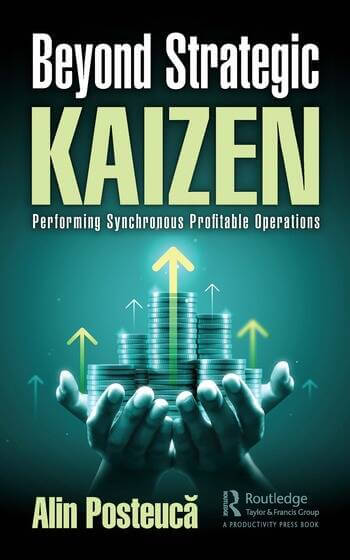
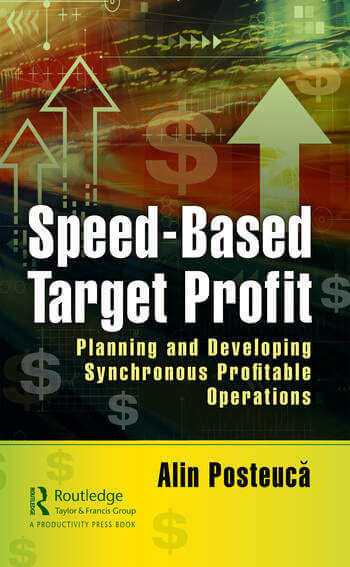
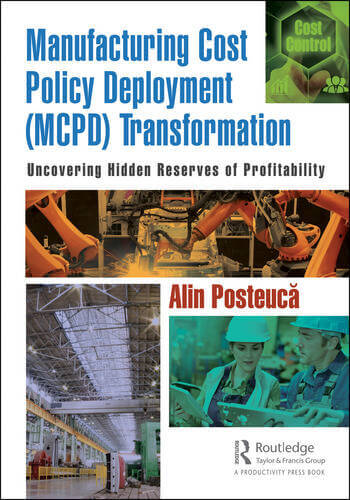
The Strategic KAIZEN architecture is documented in five works published by Routledge, CRC Press, and Taylor & Francis — covering high-volume manufacturing, synchronous profitable operations, speed-based investment governance, and manufacturing cost policy deployment. Each confirms one irreducible principle: profitability is not an outcome. It is an architecture of governed execution.
Architecture · Implementation · Results
Five strategic engagements. One KAIZENshiro architecture. Each designed to transform how your logistics network creates Flow Profit — durably, measurably, inevitably.
The foundational Strategic KAIZEN engagement — designing the complete flow execution architecture for your logistics network. From KAIZENshiro budgeting and CCLW identification through Flow Profit governance and SPO rhythmic operations.
Building the simultaneous pursuit of customer delivery profitability and internal Flow Profit into the operating architecture — governed with KAIZENshiro precision across warehousing, transport, and fulfilment.
Embedding structural resilience so that demand volatility, mix changes, and last-mile disruption are absorbed without loss of Flow Profit, customer value, or financial performance.
SPO governance for logistics: synchronising planning cadences, cross-functional decision structures across supply chain, warehousing, and transport — the entire network as one financially governed system.
End-to-end flow design aligning every node of the logistics network with the Flow Profit architecture. Every flow decision governed by its impact on SBTP and KAIZENshiro at the network's profit bottleneck.
It is the confirmation that the architecture was real.
That it governed every truck that arrived on time, every packaging deviation that was never repeated, every informational flow that absorbed disruption instead of amplifying it. Every quarter that confirmed that logistics CCLW is not an operational cost — it is a governance choice. And that the organisation that made that choice did not optimise its network. It architected its competitive advantage.
That is what Strategic KAIZEN produces in logistics: not an optimised network, but an organisation where Flow Profit is the natural consequence of a governed, financially traceable, compounding execution architecture — confirmed in financial statements, not in logistics KPI reports.
intentional — or it is loss.
 English
 Romana