


for Ferrous &
Non-Ferrous Metals.
In metals, every hour is intentional or expensive. Every kilowatt is profit or loss. Every tonne is financially governed or it is not — and that distinction defines the quarter.
Continuity is an architecture.
Automotive has takt. Electronics & High-Tech has modular complexity. Logistics has volatility. Ferrous & Non-Ferrous Metals has thermal continuity. It cannot be guaranteed. It cannot be stabilised through procedures. It cannot be controlled through software alone. But it can be extended, protected, synchronised — and converted into profit.
Every unplanned shutdown costs $187,500 per hour. Every thermal disruption introduces variation that propagates through metallurgical quality, metal yield, and energy consumption. Process continuity is not a technical achievement — it is the most financially consequential discipline in the industry.
Strategic KAIZEN transforms process continuity from a structural vulnerability into a governed competitive advantage — through KAIZENshiro budgeting that makes every energy loss and environmental cost visible, SBTP that governs every shutdown investment, and SPO routines that synchronise melting, refining, casting, and rolling without amplifying thermal variation.
The metals organisations that sustain competitive advantage are not those with the largest furnaces or the most modern equipment. They are those that built the architecture through which every process minute became intentional, every kilowatt of energy was traced to its financial consequence, and every CCLW (Critical Cost of Losses and Waste) was governed before it eroded Takt Profit.
In process industries, process time is not a production metric. It is the financial limit of the entire plant. Every hour of unplanned downtime is CCLW. Every kilowatt above the ideal consumption curve is a loss with a financial address. Strategic KAIZEN does not optimise furnaces. It governs the conditions under which discontinuity cannot erode Takt Profit.
It Was Never Architected to Govern Process Profit.
Ferrous & Non-Ferrous Metals operates at the intersection of physics, chemistry, and permanent financial pressure. Process continuity is the fundamental prerequisite of profitability — and the most difficult to govern. Thermal variation propagates into quality, yield, and energy consumption simultaneously. Shutdowns, whether planned or unplanned, introduce CCLW at a scale that most organisations have never quantified. At $187,500 per unplanned hour, 23 hours of monthly downtime per facility is not an operational problem. It is a governance failure — chosen to manifest as a maintenance cost.
Every furnace, every converter, every continuous caster, every rolling mill is simultaneously a value-creation asset, a performance bottleneck, and a source of invisible CCLW — Critical Cost of Losses and Waste that standard metallurgical accounting cannot quantify: energy losses never traced to their Takt Profit consequence; environmental costs absorbed as structural expense while a recovery architecture was never built; metal yield deviations that erode profit margins before they appear in the P&L.
Process time is not a production constraint. It is the financial limit of the entire organisation. Every hour above ideal process continuity is CCLW. The metals plant that has not made its CCLW visible has not yet begun to govern its Takt Profit.
- Continuous process regime — where every shutdown is a financial event and every restart a CCLW accumulation
- Thermal variation that propagates simultaneously into metallurgical quality, metal yield, energy consumption, and scrap rates
- Energy as the real currency of profit — not measured, never governed by Takt Profit logic
- Environmental costs absorbed as fixed expense while recovery architectures remain unbuilt
- OEE eroded by the 8 Big Losses specific to thermal processes — quantified in reports, ungoverned in the P&L
- Decalages between melting, refining, casting, and rolling that amplify variation instead of synchronising flow
- Maintenance culture reactive rather than rhythmic — consuming bandwidth that should govern continuity
- Digital transformation deployed as dashboards over an ungoverned process architecture
They are producing without a governing architecture. At $187,500 per hour, that distinction is not operational. It is existential.
Breakdowns are logged, root-caused, and repaired. They are never aggregated into their true CCLW — never traced to their Takt Profit consequence. At $187,500 per hour, 23 hours monthly is $4.3M per year per facility in ungoverned financial exposure. The governance architecture that should have prevented this was never built.
Specific energy consumption is measured. It is never governed by Speed-Based Target Profit logic. The kilowatt is tracked on utility bills and absorbed into standard cost. The architecture that transforms every kilowatt into a governed Takt Profit decision — that traces every energy deviation to its financial address — was never designed.
Environmental costs — waste treatment, chemical recovery, emissions management — are absorbed as operational fixed costs. The recovery architecture that converts these structural expenses into KAIZENshiro contribution has never been built. The CCLW compounds quarter after quarter. The financial address was always known. The governance never followed.
Temperature deviations in melting and refining propagate into casting defects, metal yield losses, and reprocessing costs. Each variation event is managed operationally. None are governed through an SPO framework that synchronises the entire thermal chain — melting to refining to casting to rolling — as one financially governed system.
Planned maintenance shutdowns are executed. Their duration, cost, and energy ramp-up profile are never governed by SBTP precision. The vertical restart architecture that should protect Takt Profit during transition — governing every hour of ramp-up against its SPO consequence — was never engineered. The shutdown is managed. The architecture does not exist.
Kaizen projects run. OEE improvements are reported. Energy audits are completed. But the KAIZENshiro budget that should aggregate every improvement into its Takt Profit contribution does not exist. Activity is mistaken for architecture. The P&L absorbs the loss. The organisation absorbs the illusion of progress.
The result is a plant that produces — but does not govern its Takt Profit. That maintains — but does not architect its continuity. That improves — but cannot trace its CCLW. The metals organisation that cannot see its CCLW has already decided to fund it — one unplanned hour at a time.

The First Financially Governed
Process Continuity Architecture.
Strategic KAIZEN is the first framework engineered to transform process time from an operational constraint into a Takt Profit mechanism — in the most demanding industrial context on earth: continuous thermal processing, where every second of process carries a financial consequence and every deviation from continuity amplifies CCLW across the entire metallurgical chain.
Developed through decades of deep intervention in process industries — from ferrous steelmaking to non-ferrous refining — Strategic KAIZEN redefines the fundamental unit of organisational performance: from the improvement initiative to the process minute. Every environmental cost governed by KAIZENshiro budgeting. Every shutdown investment governed by Speed-Based Target Profit. Every process decision synchronised through SPO. This is the architecture of Synchronous Profitable Operations in continuous and batch metals production.
of the Architecture
Simultaneously governs near-term Takt Profit — through Ideal Process Time synchronisation in continuous and batch regimes — and long-horizon capability: digital twins for furnaces and continuous casting, predictive energy management, autonomous refining control, shutdown efficiency architecture, and Dual Profit (process profit + customer profit). Today's KAIZENshiro and tomorrow's resilience architecture, governed by the same financial logic.
A financial governance mechanism that surfaces, quantifies, and systematically eliminates every Critical Cost of Losses and Waste in the metallurgical process chain — energy losses in furnaces, environmental costs from chemical compounds, metal yield deviations in casting, unplanned downtime and its $187,500/hour financial footprint. Losses governed before they compound into structural competitive disadvantage.
Every investment in continuity — new equipment, energy efficiency systems, shutdown duration reduction, ramp-up optimisation — governed by a single irreducible criterion: its measurable impact on Takt Profit at the process bottleneck module. SBTP transforms investment governance from financial approximation into architectural precision — every capital commitment an act of SPO intent traced to the process minute.
SPO synchronises rhythmic planning routines and cross-functional decision structures across melting, refining, casting, rolling, and energy management — into a single coherent operating framework. Thermal variations are absorbed without amplification. Shutdowns are governed as architectural events. The organisation functions as a unified, financially governed value-creation mechanism — process minute by process minute, KAIZENshiro by KAIZENshiro.
in the Metals Organisation
Strategic KAIZEN creates a behavioural and financial infrastructure that sustains Takt Profit long after the initial transformation — permanently embedded in how the organisation governs every furnace heat, every environmental cost, every planned shutdown, every kilowatt consumed, every tonne poured.
The metals organisation that governs its CCLW does not need more sensors. It needs the architecture that makes every energy decision financially traceable, every process investment profit-governed, and every quarter a confirmation that the continuity was real — and was governed.
Every process minute measured against its KAIZENshiro consequence — not merely its OEE or productivity metric. The throughput-per-shift metric is replaced by the Takt Profit metric.
Energy losses, environmental costs, metal yield deviations invisible to standard accounting surface, are quantified, and are permanently governed by KAIZENshiro budget discipline across all process stages.
Leaders transition from managers of breakdowns to architects of process continuity and Takt Profit — at every altitude from shift supervisor to plant director decision cadence.
Melting, refining, casting, rolling, and maintenance aligned around one financial logic — KAIZENshiro. Not separate KPI frameworks per department. One governing architecture for the entire metallurgical chain.
Every kilowatt consumed is a governed decision, not a consumption fact. The specific energy curve becomes an SBTP instrument — traced to Takt Profit consequence per process minute, not per billing cycle.
Synchronous Profitable Operations routines replace firefighting — rhythmic planning cadences synchronised across the thermal process chain protect Takt Profit without absorbing thermal variation through unplanned cost.
Every planned shutdown — duration, sequence, energy ramp-down, ramp-up — governed by Speed-Based Target Profit logic. The organisation learns to govern shutdown as a strategic architectural event, not a maintenance interval.
Each KAIZENshiro cycle builds on the previous — energy recovery architectures, environmental cost elimination, yield improvement — creating sustained competitive advantage that no equipment upgrade can replicate.
From CCLW Identification to Synchronous Profitable Operations
A process industry plant — ferrous and non-ferrous metal processing, continuous manufacturing regime, one product flow chain, machine shop. 18 months into the Strategic KAIZEN programme. Top management's four governing priorities: (1) extend the number of days of continuous manufacturing flow; (2) improve OEE — especially shutdown duration and unplanned downtime; (3) reduce electricity consumption; (4) reduce environmental costs. Annual KAIZENshiro goal: $3,750,000 — achieved through 8 Strategic Kaizen and 1 Kaikaku projects, each governed by KAIZENshiro budget and traced to its Takt Profit consequence through SBTP and SPO. The Strategic Kaizen project presented here: environmental cost reduction by recovering chemical compound "X" — a CCLW that had never been made visible as a financial architecture question. Until Strategic KAIZEN made it one.
The environmental CCLW governed here had existed for years before Strategic KAIZEN made it visible. The recovery architecture had never been built — not because it was impossible, but because the CCLW had never been traced to its Takt Profit consequence. KAIZENshiro changed that — in 12 weeks, permanently.
In metals processing, the costs that compound most structurally are those that standard accounting absorbed as inevitable. KAIZENshiro makes them visible — at the process level, the shift level, and the financial statement level.
Process Industry Plant — 5 distinct processes, continuous regime. Chemical compound "X" used in Process 5. Monthly consumption data over 7 months confirmed a structural pattern: compound "X" residues were being externally recycled at a cost of $1,350,000/year (including transport, intermediate storage, handling, and regulatory taxes). The KAIZENshiro Budget identified and quantified the environmental CCLW at $675,000/year — 18% of the annual KAIZENshiro goal of $3,750,000. This was not a maintenance decision. This was an architecture question governed by SBTP: what is the measurable Takt Profit impact of building the recovery versus absorbing the external recycling cost? The answer was unambiguous. Team: 5 members + project leader. Timeline: 4 weeks for identification + 8 weeks for full implementation (12 weeks total).
The team performed a comprehensive analysis of Process 5: layout, all equipment parameters (temperatures, pressures, cycle time, process lead time), 6 major product types, 3-shift staffing, production volume per shift, compound "X" consumption by shift and product type, scrap rate, and health & safety aspects. Root cause: compound "X" was consumed and externally recycled rather than internally recovered — no internal recovery infrastructure existed. Solution: acquisition and installation of an internal recovery system for compound "X" — evaluated through rigorous supplier selection (two candidates, technical and economic criteria applied: recovery tank capacity and cost per 100kg/day). The selected supplier accepted two critical technical modifications: (1) distillation system redesign and (2) heat exchanger modification. Future activity planned: compound "Y" approach extended to Process 2.
- ✓CCLW $675,000 → $0 — annual environmental CCLW target met and exceeded within 12 weeks of launch
- ✓External recycling cost eliminated — $1,350,000/year in external recycling (transport, storage, handling, taxes) permanently replaced by internal recovery architecture
- ✓KAIZENshiro 18% contribution confirmed — $675,000 target achieved — 18% of annual $3,750,000 KAIZENshiro goal from one architecture decision
- ✓Internal recovery system installed — compound "X" recycled on-site — distillation system and heat exchanger modified to supplier specification
- ✓Takt Profit impact confirmed — SBTP analysis verified: internal recovery delivers measurable Takt Profit contribution per process minute at Plant JJ
- ✓Manufacturing & cash flow budgets achieved — KAIZENshiro team confirmed: manufacturing improvement targets and cash flow improvement targets both met
- ✓New standard for Process 5 implemented — use standard for compound "X" developed and deployed — PFC performance indicators updated and validated
- ✓Compound "Y" — Process 2 extension planned as next KAIZENshiro cycle · architecture proven scalable
The $675,000 CCLW eliminated here is not a cost saving. It is a Takt Profit restoration — traced to the process minute, confirmed in the financial statements of every quarter that followed. Takt Profit is not what the plant produces. It is the financial limit of what the plant governs.
SBTP governed the investment decision: internal recovery vs. external recycling. The criterion was not the capital cost. It was the measurable impact on Takt Profit at the process bottleneck. The architecture that answered this question correctly is the architecture that delivered $675,000 in 12 weeks.
SPO synchronised the Project 5 environmental recovery into the broader KAIZENshiro programme — 8 Strategic Kaizen + 1 Kaikaku — each governed by the same financial logic, each confirmed in the same quarter's financial statement. Profitability is not a departmental target. It is a governed, synchronised architecture.
One KAIZENshiro budget. One Strategic Kaizen project. One environmental CCLW that had accumulated for years before Strategic KAIZEN made it a financial architecture question. An internal recovery system built where external recycling had always been accepted as structural cost. The result: $675,000 of annual CCLW eliminated. Takt Profit restored. Architecture confirmed — in 12 weeks, without additional capital, through the discipline of governed execution.
Source: Alin Posteucă,
Manufacturing Cost Policy Deployment (MCPD): Profitability Scenarios
Routledge, New York, 2019, pp. 241–256
Also: Alin Posteucă,
Beyond Strategic Kaizen: Performing Synchronous Profitable Operations
Routledge, New York, 2023
In metals, the most expensive cost is not energy. It is not maintenance. It is the cost that was never made visible. Strategic KAIZEN changes that — and in doing so, transforms the financial architecture of the entire plant.
over 30 applications across diverse industries
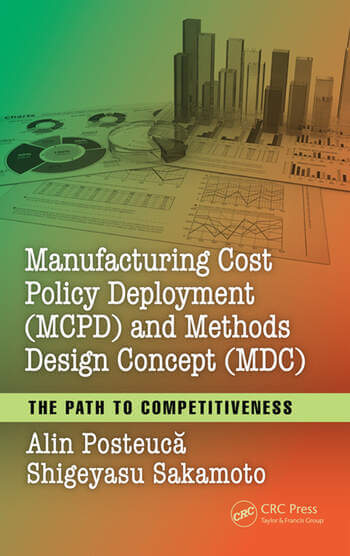
The Strategic KAIZEN architecture is documented in five works published by Routledge, CRC Press, and Taylor & Francis — covering process industries, synchronous profitable operations, speed-based investment governance, and manufacturing cost policy deployment. Profitability is not an outcome. It is an architecture of governed execution.
Architecture · Implementation · Results
Five strategic engagements. One KAIZENshiro architecture. Each designed to transform how your metals organisation creates Takt Profit — durably, measurably, inevitably.
The foundational Strategic KAIZEN engagement — designing the complete process execution architecture for your metals plant. From KAIZENshiro budgeting and CCLW identification through Takt Profit governance and SPO rhythmic operations across the entire metallurgical chain.
Building the simultaneous pursuit of process profitability and customer delivery profitability into the operating architecture — governed with KAIZENshiro precision across energy, yield, environmental costs, and shutdown efficiency.
Embedding structural process resilience so that thermal variation, shutdown events, and raw material volatility are absorbed without loss of Takt Profit, customer delivery performance, or financial results.
SPO governance for process industries: synchronising planning cadences and cross-functional decision structures across melting, refining, casting, rolling, energy, and maintenance — the entire plant as one financially governed system.
End-to-end process flow design aligning every stage of the metallurgical value chain with the Takt Profit architecture — every process decision governed by its impact on SBTP and KAIZENshiro at the profit bottleneck.
It is the confirmation that the architecture was real.
That it governed every unplanned shutdown that was prevented, every kilowatt of energy that was traced to its financial consequence, every environmental cost that was recovered rather than outsourced, every quarter that confirmed that process continuity is not a maintenance discipline — it is the most financially consequential governance decision in the metals industry. And that the organisation that made that decision did not optimise its furnaces. It architected its irreversible competitive position.
That is what Strategic KAIZEN produces in Ferrous & Non-Ferrous Metals: not an optimised process plant, but an organisation where Takt Profit is the natural consequence of a governed, financially traceable, compounding execution architecture — confirmed in financial statements, not in OEE reports or energy audits.
intentional — or it is loss.